
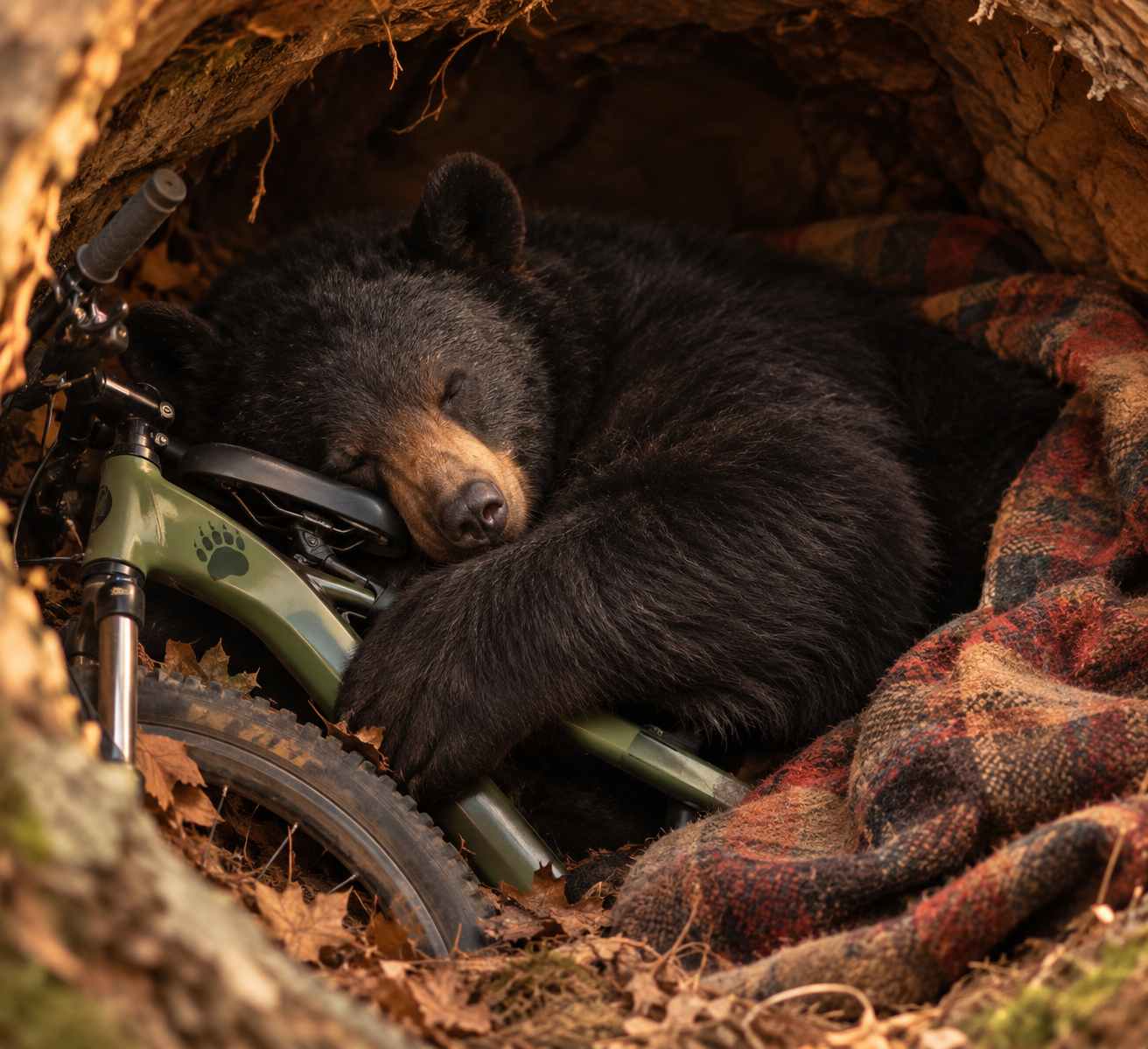
Bears Headed to the Den
As autumn gives way to winter, the American black bear begins preparing for one of nature’s most remarkable adaptations: hibernation. During late summer and fall, bears enter a period of intense feeding called hyperphagia, consuming large quantities of food to build the fat reserves they will depend on through the winter. Acorns, beechnuts, berries, insects, and other available foods help them put on substantial weight before settling into a den.
Black bears typically den in late fall or early winter and emerge in spring, although the timing varies with latitude, weather, food availability, and the individual bear. A den might be a hollow tree, a rock crevice, a brush pile, or a shallow depression beneath the roots of a fallen tree. Despite their size, bears can squeeze into surprisingly small spaces, often choosing a sheltered location that offers protection from wind and snow.
Unlike many small hibernating mammals, black bears do not allow their body temperature to drop dramatically. Their temperature falls only several degrees, while their heart rate and breathing slow considerably. Their metabolism decreases, allowing them to survive for months without eating, drinking, urinating, or defecating. Remarkably, they conserve muscle strength and much of their bone mass despite remaining inactive for such a long period.
A black bear’s winter sleep is not necessarily uninterrupted. Bears can shift position, respond to disturbances, and, under certain circumstances, leave their dens during mild weather. Females often give birth during the winter denning period, typically in January or February. Newborn cubs are tiny, blind, and helpless, weighing roughly half a pound. They nurse in the warmth of the den while their mother continues to rely on her stored fat reserves.
When spring arrives, bears emerge hungry and ready to forage. Their first meals may consist of grasses, buds, roots, and carrion, with richer foods becoming available as the season progresses. The cycle begins again: feeding, fattening, and preparing for another winter. Black bear hibernation is more than a long winter’s nap. It is a remarkable physiological strategy that allows these adaptable animals to survive seasonal shortages while conserving energy until the forest comes alive again.
The moral of the story is, we’re headed off to the den. You’ll still be able to wake us if you’d like to take a brisk ride, online reservations and delivery will continue to be an option as weather allows.